
Scaling Neobanks
Your MVP core worked for the first thousand users. It won't hold past them balances, products, and reporting are all starting to strain. You need it re-architected without taking the lights down.

Architecture built for scale, not just demos
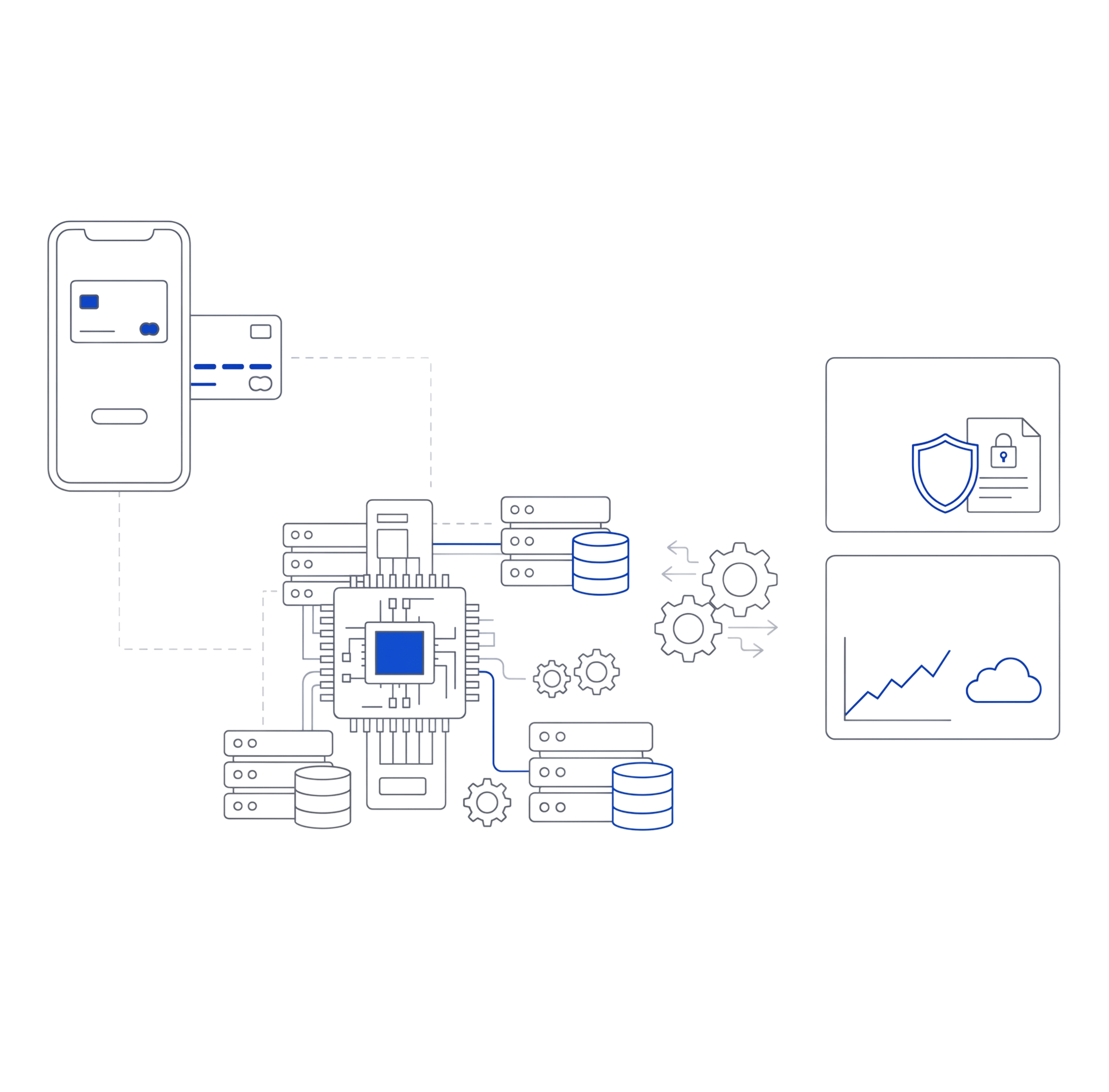
Neobanking platform engineering is the core a banking product runs on. That's the ledger, account and wallet systems, lending engine, product orchestration, and compliance workflows. It's not the mobile app sitting on top of it.
A banking app shows a balance. A neobanking platform holds money, state, and compliance correctly under load. That means a ledger that can prove any historical balance for an audit. It means account systems that actually scale and product rules that aren't hardcoded into the app.
The app can look perfect while the core underneath is fragile. That fragility surfaces during growth, audits, or expansion into a new market never at a convenient time.
Magnise builds and rebuilds that core for neobanks, embedded finance companies, and digital financial products. The kind where the infrastructure has to survive scale and regulatory scrutiny, not just demo well.
Partners outgrowing fragile financial cores
Your MVP core worked for the first thousand users. It won't hold past them balances, products, and reporting are all starting to strain. You need it re-architected without taking the lights down.

You're embedding accounts, wallets, or payments into another product. You need ledger integrity and clean APIs underneath, not a UI shell on top.

Your credit or wallet logic has fragmented across half a dozen services. You need a real lending engine and a wallet ledger engineered as core infrastructure.

You're launching a digital product under real regulatory scrutiny. You need a core that's compliance-ready on day one, not patched up the week before the audit.
The building blocks of resilient finance

A composable core built on event sourcing and CQRS, with ACID guarantees and point-in-time balance snapshots.
The current balance is a projection of an immutable event stream not a row you might overwrite.
Highly available account management with real-time balance calculation. Configurable account types, limits, and fees, so a new product doesn't mean a new schema.

Wallet ledgers with double-entry integrity, P2P transfers, and balances that stay correct under concurrency. Automated reconciliation runs continuously, not at month-end.

Immutable, append-only ledgers with continuous reconciliation built in. The transaction history is auditable end to end regulators can verify it without our help.

Loan origination, automated underwriting, and credit decisioning in one engine. Dynamic interest, amortization, and repayment schedules including the collection flows nobody likes building.
Configurable product rules, not logic hardcoded into the app. New products launch without anyone touching the core.

Consent management, standardized API gateways, and third-party connectivity under PSD2 / Open Banking. mTLS where the spec requires it, audit trails everywhere it doesn't.

Onboarding modelled as a state machine: document parsing, identity checks, screening, all in one flow. It routes each case to approve, reject, or manual review — and the compliance team can see why.

Regulatory reporting, transaction monitoring, and audit trails built into the platform from the first commit. Not bolted on the week before submission.

A Customer 360 view, transaction investigation tooling, maker-checker workflows, RBAC, and immutable audit logging. Everything the operations and compliance teams actually need, in one admin portal.
What makes neobanking platforms hard to engineer
How neobanking platform engineering works at Magnise

We start by mapping what needs to be built, which integrations matter, and which regulators actually care. You walk out with a technical concept and a core-architecture plan, not a timeline.

We work out the ledger, account model, and product orchestration before any production code gets written. In banking, the data model is the expensive thing to get wrong — better on paper first.

Ledger integrity, audit logging, RBAC, and compliance checkpoints go into the core from the first commit. They're not something we add later under deadline.

We wire up KYC/AML, open banking APIs, and card/payment providers. When migrating off a fragile MVP core, we focus on preserving balance integrity and transaction history throughout the transition.

We handle deployment, monitoring, and what comes after — new products, new markets, new regulators. Where relevant, we apply proven fintech engineering patterns and reusable components instead of rebuilding everything from zero.
Why fintech companies choose Magnise

We're not a generalist agency where banking is one of twenty verticals on the website. Our experience sits inside regulated financial systems neobanking, payments, trading. You're not paying us to learn the domain on your codebase

Ledgers, account systems, lending engines, compliance workflows we engineer the infrastructure the app sits on. That's where integrity actually matters and where most failures happen

Most neobank failures trace back to early architectural calls. A ledger that can't prove balances, or products hardcoded into the app, takes years to unwind. So we treat core design as the highest-leverage part of the engagement
Through our work with Fintatech, we've gained hands-on experience building and evolving fintech components used in production environments. This gives our team practical
Learn about FintatechNeobanking platforms we've built
Neobanking Platform Engineering
A European consumer neobank had outgrown its MVP core. Wallet balances drifted under concurrent load and required manual correction.
Platform scope & integrations
~90%
Drop in manual reconciliation effort via continuous automated checks with exception-only review
2 days → <10 min
Onboarding time reduction for straight-through-processed applications
Explore related fintech engineering
We build payment infrastructure with transaction integrity and risk controls engineered directly into the payment flow.
What we build: Payment orchestration, transaction risk scoring, digital wallets, reconciliation, clearing and settlement.
Tell us what you're building or rebuilding. Our engineering team looks at the context within 1–2 business days, then we set up a call. It's a technical discussion, not a sales call



